Why Maintenance Looks Different in Austin

The maintenance calendar for a decorative concrete patio in Austin is not the same as in Houston, Denver, or anywhere with a different climate profile. Central Texas throws a specific combination of stressors at outdoor concrete: UV index among the highest in the continental US, summer surface temperatures that regularly exceed 150°F on exposed slabs, heavy clay soil that moves seasonally, and rainfall events that cycle between drought and flooding within weeks.
At Decorative Concrete of Austin – Polished & Stained Concrete, we install decorative patio surfaces — and we come back to see how they’re holding up. What we’ve learned from maintaining surfaces across the metro is that most patio finish failures aren’t caused by the material or the installation — they’re caused by skipped or delayed maintenance at predictable intervals.
This is the actual maintenance routine we recommend to every customer after a patio installation. It applies to stained concrete, stamped overlays, spray texture, and any other decorative finish on an outdoor concrete surface.
The Core Maintenance Principle: Protect the Sealer
Every decorative outdoor concrete finish has a sealer as its outermost layer. That sealer is doing the work of protecting everything underneath it — the color, the texture, the concrete itself — from UV radiation, water infiltration, freeze-thaw cycling, oil, and organic staining.
Maintaining a decorative concrete patio in Austin is, in large part, maintaining that sealer. When the sealer fails and isn’t replaced, the damage that accumulates in the substrate is more expensive to fix than the resealing would have cost. The sealer is the sacrificial layer — it’s supposed to wear out. The job is to replace it before the underlying surface takes the damage.
The Water Bead Test
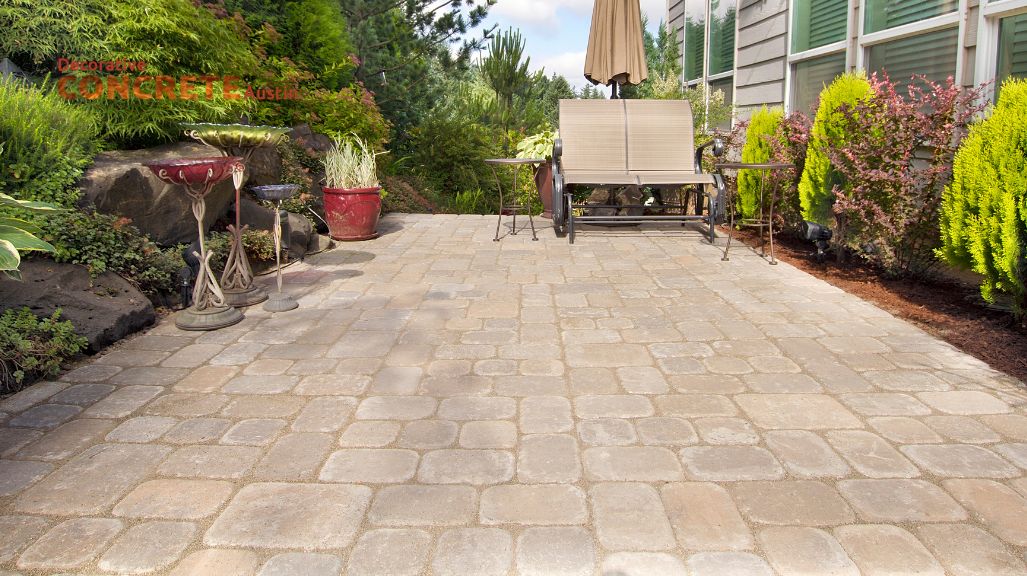
The simplest maintenance diagnostic available: pour a cup of water on the patio surface. If it beads up and sits on top, the sealer is intact. If it absorbs into the surface and darkens the concrete, the sealer is depleted and it’s time to reseal.
Do this test twice a year — once in spring before summer, and once in fall after the hardest UV months. Most Austin patios need resealing every two to three years. Full-sun exposure can push that closer to every 18 months. Covered patios may go three to four years between applications.
Routine Cleaning: What Works and What Doesn’t
What to use
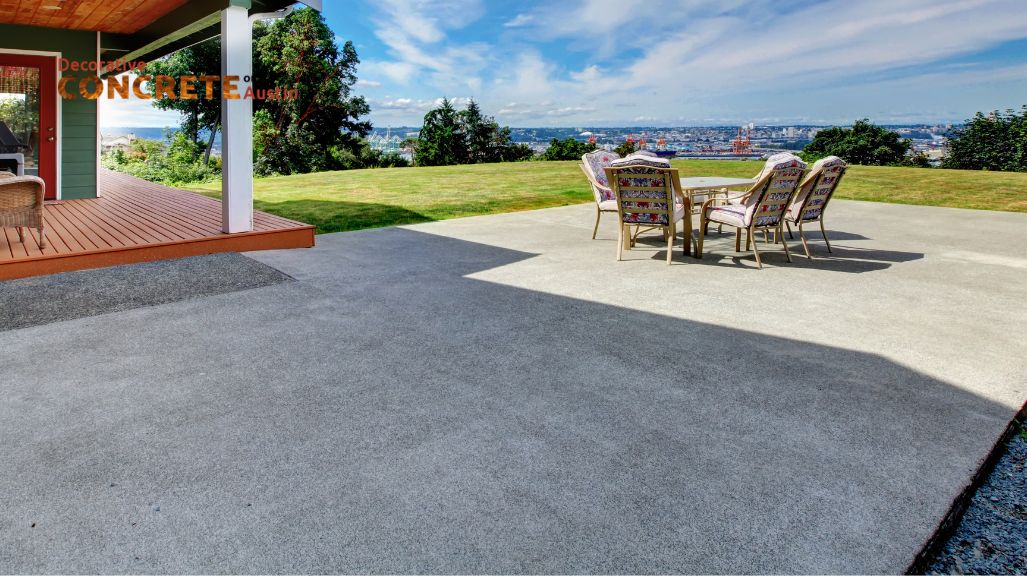
A pH-neutral cleaner — Simple Green, a diluted dish soap, or a product specifically labeled as concrete-safe — in a bucket of warm water. Apply with a soft-bristle brush or a deck brush. Rinse thoroughly. This is sufficient for routine maintenance cleaning and won’t affect the sealer.
What to avoid
Vinegar, bleach, ammonia, muriatic acid, and any product with a pH below 6 or above 10. These strip sealers, can affect the chemistry of acid-stained surfaces, and leave the concrete exposed after cleaning. The cleaning saves you money on resealing costs — using the wrong product immediately after is counterproductive.
Pressure washing guidelines
A pressure washer is fine to use on concrete patios with the right technique. Use a 40-degree fan tip — not a turbo or rotary nozzle. Keep pressure under 1,500 PSI. Hold the nozzle at least 12 inches from the surface and keep it moving. Concentrated high-pressure spray on a single point can etch the surface, damage texture detail on stamped overlays, or strip sealer along edges.
After pressure washing — especially before a planned resealing — let the surface dry completely before applying sealer. In Austin summer heat that typically means 24 hours; in cooler or humid conditions, allow 48 hours.
Resealing: The Most Important Maintenance Step
When to reseal
When the water bead test fails, or when you notice the surface looking duller or more porous than when it was new. Don’t wait for obvious deterioration — the sealer’s job is to fail before the concrete does. In Pflugerville and Leander where clay soil movement stresses slab edges and joints, resealing on schedule also helps prevent water infiltration at those points.
Which sealer to use
Use the same sealer type as the original application — solvent-based over solvent-based, water-based over water-based. Applying a solvent-based sealer over an existing water-based sealer can cause adhesion failure and blushing. If you’re unsure what was originally used, ask us — we document the products used on every job we install.
Application conditions
Sealer applied in direct Texas summer sun at 95°F will flash-cure too quickly and won’t penetrate properly. Apply in the early morning, in shade if possible, when surface temperature is below 90°F. Don’t apply before rain — wait for a dry window of at least 24 hours after application. In Georgetown and Round Rock where spring and fall offer the most workable windows, we schedule resealing projects in March–April and October–November.
Application method
Thin coats applied in multiple passes outperform a single heavy coat. A thick single application traps solvent, takes longer to cure, and is more likely to peel or blister. Roller application followed by back-rolling is standard for patio-sized surfaces. Keep a wet edge to avoid lap marks.
Dealing With Common Austin-Specific Issues
Oak leaf and acorn staining
Live oak trees are everywhere in West Austin, South Austin, and the Hill Country suburbs, and their leaves and acorns leave tannin stains on concrete quickly. Clear debris promptly — tannins penetrate sealer within days in wet conditions. For existing stains, a citrus-based cleaner or hydrogen peroxide solution applied and allowed to dwell, then scrubbed, handles most organic staining without damaging the surface.
Efflorescence
White chalky deposits on the surface are efflorescence — mineral salts migrating from within the concrete and crystallizing on the surface as moisture evaporates. It’s common on new concrete in the first year and in areas with poor drainage or consistent moisture. A diluted phosphoric acid wash (following manufacturer instructions carefully) removes it. After treatment, the surface needs thorough rinsing and resealing.
Thermal cracking at control joints
Austin’s temperature range means concrete slabs move. Control joints are cut into slabs specifically to control where that movement happens. The joint filler or caulk in control joints typically fails before the slab does and needs to be replaced every few years — especially on slabs exposed to full sun. When joint filler fails and water enters, efflorescence and staining follow at the joint line. This is a maintenance item most homeowners skip until it becomes a larger problem.
Furniture and planter marks
Metal furniture legs left in one position trap moisture and can cause rust staining. Use rubber-tipped furniture legs or furniture pads. Move planters periodically — constant moisture contact in one spot over seasons accelerates sealer breakdown and can cause discoloration in the concrete beneath.
Annual Maintenance Calendar

Spring (March–April): Pressure wash with correct technique. Do the water bead test. If resealing is needed, this is the best window — temperatures are moderate and rain is predictable enough to plan around. Inspect and replace any failed control joint caulk.
Summer (May–August): Minimize harsh chemical exposure. Rinse furniture drip marks and organic debris promptly. Avoid power washing in peak heat. Keep plants and planters moved periodically.
Fall (September–November): Second water bead test. Second opportunity to reseal if spring window was missed. Clear falling leaves and organic debris promptly — this is the highest-risk period for tannin staining in Austin.
Winter (December–February): Inspect for any joint or crack movement after the first cold spells. Austin’s freezes are infrequent but can affect surface sealers — if a hard freeze is forecast on a recently pressure-washed or damp surface, protect it if possible.
Our patio services include maintenance resealing and inspection — if you’d rather have us handle the annual check and reseal cycle, reach out for a maintenance estimate.
Areas We Serve
Decorative Concrete of Austin – Polished & Stained Concrete serves homeowners and businesses throughout Central Texas, including Austin, West Austin, South Austin, Pflugerville, Leander, Georgetown, Round Rock, and Cedar Park. Contact us to confirm availability in your area.