Decorative Concrete of Austin – Polished & Stained Concrete has been managing concrete installations in Central Texas since 2012, and cure time is one of the questions we get most often in the days leading up to a project. Homeowners want to know when they can move back in, when they can park in the garage, and when the patio is ready for summer use. The honest answer is that it depends on the system installed and the weather conditions at the time. In Austin’s climate, both of those variables matter more than most national product guides suggest.
This post covers cure times for each of the main decorative concrete systems we install in Austin: new concrete pours including stamped applications, stained concrete floors, polished concrete, and epoxy and polyaspartic coatings. It also covers how Austin’s specific climate conditions affect those timelines and what we do to account for them.
Why Austin Climate Changes the Cure Timeline

Austin’s summer heat creates concrete and coating cure conditions that are more demanding than most of the product specifications are written for. Concrete mix designs and coating products are typically tested and rated in laboratory conditions around 70 to 75 degrees Fahrenheit. On an Austin summer afternoon, a south-facing concrete slab can reach surface temperatures well above 100 degrees Fahrenheit. That is a meaningfully different cure environment.
Higher temperatures accelerate cure rates for both concrete and coating systems. That sounds like a benefit, but fast cure also comes with risks. Concrete that dries too quickly on the surface can develop plastic shrinkage cracks before it has gained adequate strength. Coating systems applied to overheated slabs can develop adhesion problems, bubbling from off-gassing, or surface defects that are visible in the finished floor.
Austin’s spring and fall humidity also affects coating cure quality. High humidity slows solvent evaporation and can extend cure windows or affect the clarity and smoothness of the final coating film. We monitor temperature and humidity on project days and adjust application timing or product selection accordingly.
New Concrete Pours: Stamped Patios and Driveways
New concrete pours for stamped concrete patios and driveways follow a cure timeline based on concrete chemistry rather than coatings. Fresh concrete gains strength progressively after the pour. The general milestones are:
- 24 to 48 hours: adequate strength for light foot traffic in normal conditions
- 7 days: adequate for vehicle traffic on driveways, though avoid heavy loads
- 28 days: full design strength achieved
In Austin summer heat, concrete sets faster, which can mean the surface is ready for foot traffic sooner than the numbers above suggest. But faster setting also means the stamping window is shorter. Our crews account for this by coordinating the pour timing and staging to keep the stamping phase within the workable consistency window. Large summer pours may be staged differently than the same project in October.
The sealer applied after a stamped concrete project requires the slab to have gone through adequate initial cure before application begins. Applying sealer too soon traps moisture in the concrete, which causes whitening and adhesion problems. We schedule the sealer application at the appropriate interval after the pour based on the project conditions.
Stained Concrete Floors
The cure timeline for stained concrete floors depends on whether the project is a new pour or an existing slab. For staining existing slabs, the main cure consideration is the sealer applied after the stain. Most sealer products used on stained concrete in Austin allow light foot traffic within 24 hours of the final coat. Full hardening of the sealer film, to the point where furniture can be placed and normal use can resume, typically takes 72 hours.
In Austin summer conditions, sealer on interior floors in air-conditioned spaces cures at predictable rates because the temperature is controlled. Sealer on exterior stained concrete in direct sun cures faster due to heat but may show surface defects if applied during peak temperature hours. We apply exterior sealers in the early morning or late afternoon during summer months to stay within the product’s recommended application temperature range.
For new slab staining projects, the slab must be adequately cured before staining begins. Acid stain reacts with the calcium hydroxide in the concrete. A slab that is too new and still actively curing may produce inconsistent stain penetration and color results. The minimum cure period before staining a new slab is typically 28 days, which aligns with full strength development.
Polished Concrete Floors
Polished concrete has a different timeline from coating systems because it involves mechanically grinding and densifying the existing slab rather than applying a product that needs to cure. The polished concrete process itself does not have a cure wait. The floor can generally be walked on the same day polishing is complete.
If a topical guard or hardener is applied as part of the polishing process, that product has its own cure timeline, typically 24 to 48 hours before the floor is ready for normal use. The topical guard needs to fully penetrate and dry before foot traffic is allowed. Placing furniture on a topical guard before it has hardened can leave impressions or marks.
One Austin-specific consideration for polished concrete: the densifier applied during the polishing process reacts with silica and calcium compounds in the concrete. In very new slabs, this reaction is more active. The densifier application timing and the cure window between densifier and subsequent polishing steps is managed differently on a newer slab than on a slab that has been in place for years.
Epoxy and Polyaspartic Garage Floor Coatings
Epoxy and polyaspartic garage floor coatings are among the most time-sensitive systems we work with in Austin because homeowners typically need to park in their garage within a reasonable timeframe after the project. The cure timelines for these systems in Austin conditions are:
- Polyaspartic systems: light foot traffic within 4 to 6 hours of final coat, vehicle parking within 24 hours in most cases
- Epoxy systems: light foot traffic within 24 hours, vehicle parking typically after 72 hours
- Full chemical cure for both systems: 7 days
Polyaspartic’s fast cure is one of its key advantages in Austin, where homeowners do not want to be without their garage for multiple days. The faster return to service comes from the polyaspartic chemistry, which cures through a different mechanism than epoxy and is much less sensitive to temperature and humidity variation during cure.
In summer heat, epoxy cure times can be misleading. The surface may feel dry to the touch faster than expected, but the full cross-linking cure that gives epoxy its chemical and abrasion resistance takes longer. Parking a vehicle with hot tires on an epoxy floor that has surface cured but not fully cross-linked is one of the main causes of hot tire pickup. We are specific about vehicle parking timelines for every garage project.
How We Schedule Around Austin Weather
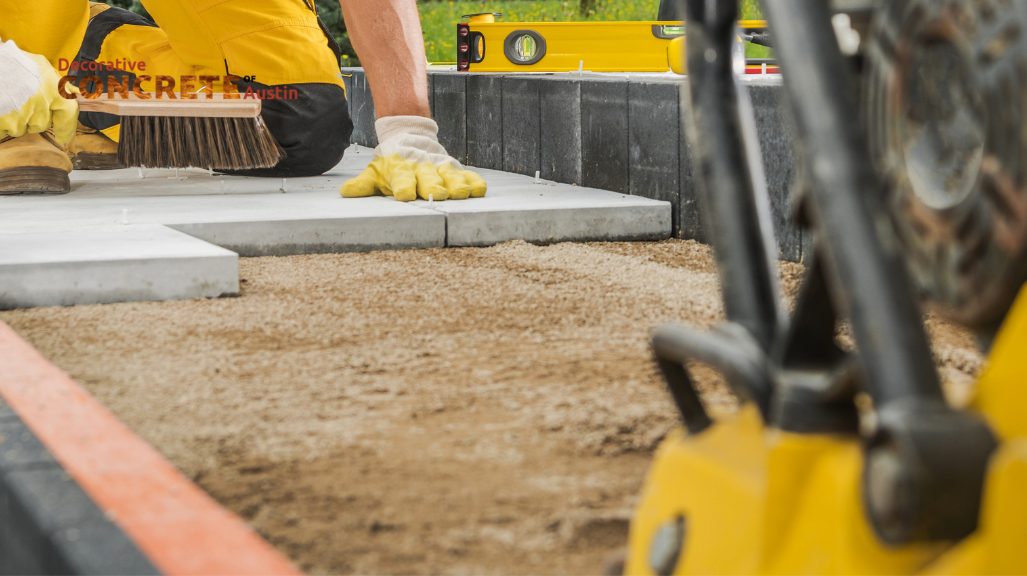
Scheduling decorative concrete projects in Central Texas means accounting for weather at every stage. We avoid applying coatings during forecast rain windows for exterior projects, as moisture on the surface during application causes adhesion and appearance problems. For interior projects, we check forecast humidity and temperature for multi-day projects to plan each phase appropriately.
Summer in Austin means early morning start times for outdoor coating applications to get product down before surface temperatures climb. Fall and spring offer the most forgiving conditions for both new pours and coating applications, which is why project scheduling in those seasons tends to be tighter.
Decorative Concrete of Austin – Polished & Stained Concrete has completed more than 1,000 projects across Central Texas since 2012 and is fully insured. Contact us to schedule a free estimate. We will discuss the timing considerations for your specific project during the estimate, including the best season or time of year to plan the installation.
Areas We Serve
We serve Austin, Round Rock, Georgetown, Cedar Park, Pflugerville, Leander, Lakeway, and surrounding Central Texas communities.