Decorative Concrete of Austin – Polished & Stained Concrete sees neglected concrete surfaces regularly. A stained floor that has not been resealed in six years. A stamped patio where the sealer failed two years ago and nobody noticed. An epoxy garage floor that has been driven on daily for a decade without attention. The good news is that most neglected decorative concrete surfaces are restorable. The bad news is that restoration costs more than maintenance would have. This post covers what neglect actually does to each type of decorative concrete surface and what the realistic repair options look like.
Austin’s climate accelerates the consequences of neglected maintenance. UV exposure, seasonal temperature cycling, and the occasional hard freeze mean a surface that goes unprotected in Central Texas deteriorates faster than the same surface would in a more temperate climate. Recognizing the signs early makes the difference between a reseal and a full restoration.
Neglected Stained Concrete Floors: What You Will See
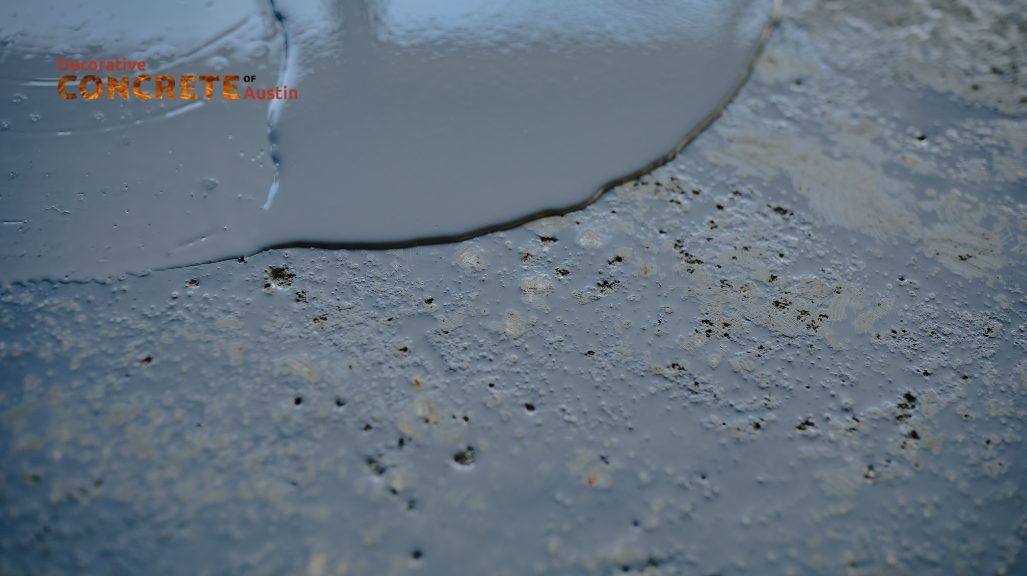
Stained concrete floors that have gone without resealing develop a predictable progression of problems. The first sign is dullness. The sealer film thins and loses its ability to reflect light the way a fresh sealed surface does. The floor looks dry and flat rather than having the depth and sheen of a properly maintained surface.
As the sealer continues to wear, the stained surface becomes vulnerable to surface abrasion. Foot traffic, furniture movement, and grit tracked in from outside begin to physically wear the stained surface rather than just the sealer on top of it. In areas of heavy traffic, the stain color wears noticeably lighter. Spills that would have wiped up easily on a sealed surface begin to penetrate and stain.
In outdoor applications, faded stain color from UV exposure compounds the problem. Austin’s UV intensity degrades unprotected concrete color faster than most interior applications experience. An outdoor stained surface that has gone three or more years without resealing in direct sun will show significant color loss in the areas of highest UV exposure.
Restoration options depend on how far the deterioration has progressed. A surface that is dull and starting to show wear can often be cleaned, lightly ground if needed, and resealed with good results. A surface where the stain has faded significantly or where the concrete has been surface-contaminated through the worn sealer may require re-staining or application of a color coat before resealing restores the appearance.
Neglected Polished Concrete: Loss of Sheen and Surface Contamination
Polished concrete floors without a maintained topical guard lose their sheen gradually. The polished surface itself does not degrade the way a coated surface does, but the topical guard that protects and enhances the sheen wears down. Without it, the floor becomes more vulnerable to surface scratching from grit underfoot and to staining from spills that previously would not have penetrated.
The restoration path for neglected polished concrete is typically more straightforward than for stained or coated surfaces. If the concrete has not been significantly contaminated or scratched through the worn guard, a professional cleaning followed by re-application of the topical guard restores the surface effectively. Heavily scratched or contaminated polished concrete may require re-polishing to a lower grit level before the guard is reapplied.
Neglected Epoxy and Polyaspartic Garage Floors
Epoxy and polyaspartic garage floor coatings in Austin that have gone without maintenance attention develop problems that are sometimes visible from the day they appear and sometimes gradual. The most dramatic failure mode is delamination, where sections of the coating lift from the concrete below and begin to peel or flake. In Austin garages, delamination is often triggered by moisture infiltration through worn areas of the coating or by the thermal cycling that stresses the bond between the coating and the slab over years of Austin summers and winters.
More gradual decline includes surface chalking and gloss loss from UV exposure in garages with south-facing doors or significant window exposure. The coating may appear intact but loses its protective properties and aesthetic quality progressively. Hot tire pickup, where vehicle tires bond to a softened coating surface and pull off chips when the vehicle moves, is another Austin-specific failure mode for epoxy systems that have aged without refreshing.
The restoration decision for a failing garage floor coating is whether to repair and recoat the existing system or to strip it completely and start fresh. Spot repairs on delaminated areas are possible on small sections. Widespread delamination, significant cracking in the coating, or a system that has been mechanically damaged throughout its surface is more cost-effective to strip and recoat than to repair piecemeal.
Neglected Outdoor Patios and Stamped Concrete

Stamped concrete patios and outdoor surfaces that have gone without resealing develop compounding problems in Austin’s climate. The first is color fading from UV degradation of the original sealer and the color systems beneath it. The second is surface staining from organic matter, mold, and algae that establish themselves on unprotected concrete in shaded or moist areas. The third is surface deterioration as the concrete itself is exposed to moisture cycling and the occasional hard freeze without the protection a functional sealer provides.
For outdoor concrete restoration, the process starts with a thorough cleaning to remove biological growth, surface staining, and embedded dirt. Pressure washing, chemical cleaning agents appropriate for concrete, and in some cases light grinding are part of the prep. Once the surface is clean and assessed, the restoration path depends on the extent of color loss and surface deterioration.
Concrete overlay systems are one of the most effective restoration tools for outdoor stamped surfaces that have significant color loss or surface deterioration. A stampable overlay applied over a properly cleaned and prepped existing slab allows for a new color system and texture without the cost of full removal and replacement. This approach works when the slab is structurally sound but the surface finish has deteriorated beyond what resealing alone can address.
The Cost of Neglect vs the Cost of Maintenance
The pattern we see consistently is that restoration projects cost significantly more than the cumulative cost of maintenance that would have prevented them. A resealing appointment every two to three years for an outdoor surface is a fraction of the cost of a restoration that involves cleaning, grinding, re-staining or re-coating, and resealing a surface that has been unprotected through multiple Austin summers.
If your decorative concrete surface is showing signs of neglect, the best time to address it is before it reaches the full restoration stage. Decorative Concrete of Austin – Polished & Stained Concrete has completed more than 1,000 projects across Central Texas since 2012 and is fully insured. We assess surfaces at whatever stage they are at and give honest recommendations about what maintenance or restoration is appropriate.
Contact us to schedule a free estimate. We serve Austin, Round Rock, Georgetown, Cedar Park, Pflugerville, Leander, Lakeway, and all of Central Texas.
Areas We Serve
Round Rock, Georgetown, Cedar Park, Pflugerville, Leander, Lakeway, West Lake Hills, Bee Cave, Buda, Kyle, Manor, and Austin.