Epoxy garage floor questions come in every week at Decorative Concrete of Austin – Polished & Stained Concrete. The most common one is about cost. Homeowners have seen a wide range of prices online and want to understand what drives the difference. The range is real, and so are the reasons behind it. This guide explains what determines epoxy garage floor cost in Austin, the meaningful differences between system tiers, and why the cheapest quote is often not the best value.
What Drives Epoxy Garage Floor Pricing
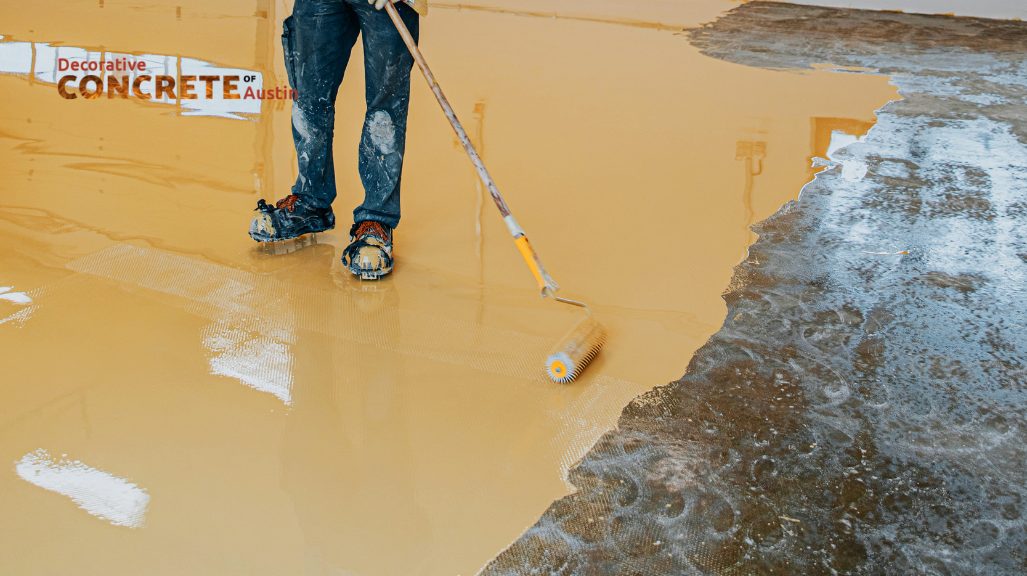
Garage size
The most obvious variable. A single-car garage and a three-car garage are fundamentally different projects in terms of materials volume and labor time. Standard single-car, two-car, and three-car garages each fall into reasonably predictable size ranges, but actual dimensions vary. We measure every garage before quoting — a nominal two-car garage can vary significantly in actual square footage.
Surface preparation
This is the most important cost variable and the one most often misrepresented in low quotes. Proper epoxy garage floor installation requires diamond grinding the concrete surface to create the mechanical profile that the coating needs to bond. This takes time and specialized equipment. It also includes moisture testing — Austin’s clay soils create vapor pressure conditions that can cause coating delamination if not identified and addressed before application.
Contractors who substitute acid etching for diamond grinding, skip moisture testing, or skip crack repair are doing less prep work. Their quotes are lower because they are delivering less. The failure modes that result — peeling at the edges, bubbling, delamination — are predictable and expensive to fix because failed coatings must be fully ground off before any new system can be applied.
Coating system
Entry-level single-coat systems, standard epoxy base plus polyaspartic topcoat, and full polyaspartic systems are at different price points. For Austin garages, particularly those with direct sun exposure through the garage door, the topcoat’s UV stability matters significantly. Standard aromatic epoxy yellows in UV—garages in North Austin and Pflugerville with south-facing doors that let in afternoon sun will show epoxy topcoat yellowing within a season or two. An aliphatic polyaspartic topcoat resolves this. See our full breakdown on epoxy coatings for the system options we offer.
Flake broadcast vs. solid color.
A full vinyl flake broadcast system adds materials and a step to the installation — flakes are broadcast across the wet base coat, excess is scraped after cure, and the topcoat locks them in. The result is a surface with built-in texture for slip resistance and a decorative appearance that hides surface imperfections well. The price difference between solid and full-flake is meaningful but modest relative to the visual improvement.
Crack and joint treatment
Garages with active cracks, spalled areas, or control joint damage require treatment before coating. Semi-rigid polyurea crack filler, joint re-routing, and surface repair all add scope. These are not optional — an epoxy coating applied over an untreated crack will fail along that crack within one Austin freeze-thaw cycle.
System Tiers and What Each Delivers

There are three broad tiers of epoxy garage floor installation that correspond to different price ranges and different performance expectations.
Entry-level: single coat, minimal prep
A single-coat system applied over acid-etched concrete. This is what most big-box DIY kits and the lowest-priced contractors deliver. The surface profile from acid etching is inadequate for reliable adhesion. These systems typically begin to peel within two to three years, particularly in Austin’s thermal cycling environment. We do not offer this tier.
Standard: epoxy base plus polyaspartic topcoat, diamond ground
The baseline system for professional residential garage floors. Diamond grinding to CSP 3 surface profile, moisture testing, full flake broadcast or solid color base coat, polyaspartic topcoat with anti-slip aggregate. This is what most Austin homeowners in Cedar Park, Round Rock, and Georgetown are specifying for a garage floor that performs over the long term.
Premium: full polyaspartic, thicker build, multiple coats
A full polyaspartic system — UV-stable at every layer, faster cure, wider application temperature range — is appropriate for garages with direct sun exposure, high vehicle traffic, or chemical exposure from automotive work. The material cost is higher than that of a standard epoxy-poly system. For the right garage, the performance difference justifies it.
The Estimate Process
Every garage floor project is quoted after a site visit. We measure the garage, assess the concrete condition, identify any prep requirements, discuss the system options, and provide a written proposal before any commitment is made.
The estimate is free. We serve Austin, Lakeway, and all of Central Texas. Schedule your free garage floor estimate, and we will tell you exactly what your garage needs and what it will involve.
For more on what the installation process looks like day by day, see our guide to garage floor coating installation in Austin.
Areas We Serve
Decorative Concrete of Austin – Polished & Stained Concrete serves homeowners and businesses throughout Central Texas, including Austin, Cedar Park, Round Rock, North Austin, Georgetown, Pflugerville, and Lakeway. Contact us to confirm availability for your project.