Decorative Concrete of Austin – Polished & Stained Concrete has been installing concrete overlay systems across Central Texas since 2012, and the category generates more questions than almost any other service we offer. The confusion is understandable: the term “overlay” covers several different product types with different appearances, thicknesses, and best-use applications. This post breaks down the three main overlay categories we work with in Austin, what each one looks like, and which situations each one suits best.
Overlays are one of the most versatile tools in decorative concrete work because they allow significant visual transformation of an existing slab without the cost and disruption of full removal and replacement. The condition of the existing slab determines which overlay system is appropriate, and that assessment happens during the estimate.
Why Concrete Overlays Are a Strong Option in Austin
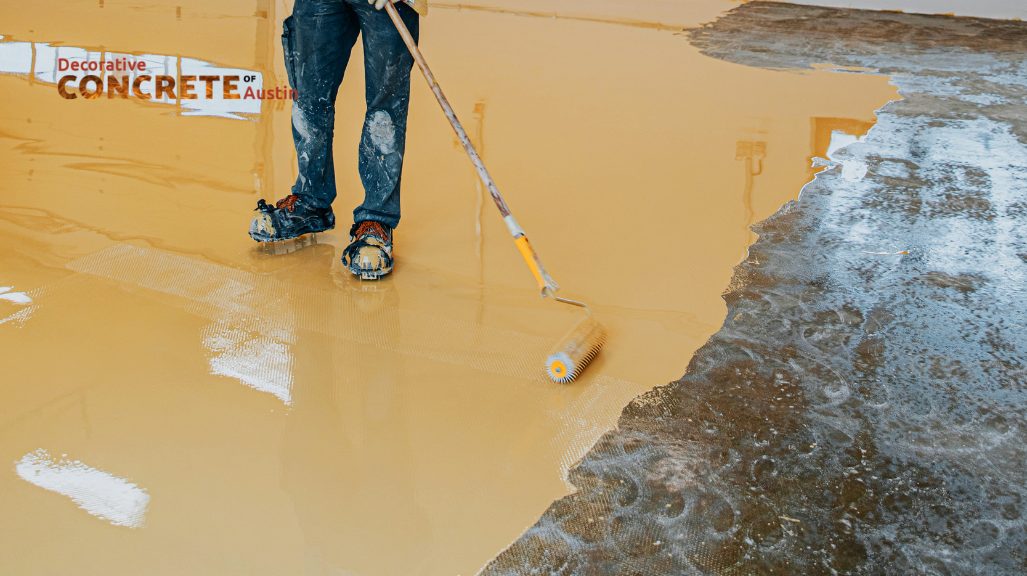
Austin homeowners frequently have existing concrete surfaces, whether interior floors, patios, driveways, or garage slabs, that are structurally sound but visually tired. The concrete may be stained, faded, pitted, or simply plain gray. A full replacement pour involves demolition, disposal, and a new pour with full curing time. An overlay system bypasses all of that and applies a fresh decorative surface directly to the existing concrete.
Central Texas clay soil causes more slab movement than many markets. That movement creates surface cracks over time that do not necessarily indicate structural failure, but do affect the appearance of bare concrete. Overlay systems, particularly those with polymer-modified formulations, handle minor slab movement better than plain cementitious products and can span and stabilize surface-level cracking. Active structural movement requires a different approach, which we identify during the estimate.
Microtoppings: Thin Film Finishes for Interior Floors
Microtoppings are ultra-thin polymer-modified cementitious overlays applied in layers as thin as 1/16 of an inch. The finished surface is smooth, seamless, and has a contemporary appearance that works well in modern Austin interiors. Microtoppings do not add significant height to the floor, which makes them a practical choice in spaces where transition strips, door clearances, or floor height matching matters.
The color range for microtoppings covers the spectrum from warm concrete grays and off-whites to earthy tans and deeper charcoals. Because the material is applied so thinly, color consistency across the floor depends heavily on surface prep quality and applicator skill. An uneven substrate or inconsistent application shows through in the finished surface. This is not a DIY product system.
Microtoppings are primarily an interior application in Austin. The thin film thickness makes them more vulnerable to freeze-thaw cycling and UV degradation on exterior surfaces than thicker overlay systems. For interior floors in contemporary Austin homes where homeowners want a sleek, continuous floor surface, microtoppings are one of the most refined finish options available. Our decorative concrete floors page shows the range of interior floor applications we handle.
Stampable Overlays: Texture and Pattern on Existing Slabs
Stampable overlays are thicker polymer-modified overlay products, typically applied at 3/16 to 3/8 of an inch, that are textured with stamp patterns before they set. This gives an existing slab the appearance of stamped concrete without a new pour. The pattern options available for stampable overlays are similar to those used in new stamped concrete pours: flagstone, slate, cobblestone, brick, and wood plank.
Stampable overlays are used on both interior and exterior surfaces in Austin. On patios and pool decks, a stampable overlay can transform a plain or deteriorating concrete surface into a textured, patterned outdoor living area without the timeline and cost of a full replacement. On interior floors with adequate slab thickness and a solid bond surface, stampable overlays can create a decorative pattern floor in spaces where homeowners want more visual interest than a smooth microtopping provides.
Color in stampable overlays works similarly to new stamped concrete. A base color coat is applied first, followed by the overlay material itself which is then stamped and colored with release agent during the stamping window. The color and pattern options are extensive, and the finished result at normal viewing distance is visually indistinguishable from new stamped concrete.
Spray Texture Overlays: Slip-Resistant Surfaces for Outdoor Use
Spray texture overlays are applied using spray equipment to create a uniform, fine-grained texture on an existing concrete surface. The texture profile provides significantly better traction than a smooth sealed surface, which makes spray texture the most common overlay system for pool decks, exterior walkways, and porte-cocheres in the Austin area.
The finished appearance of a spray texture overlay is more utilitarian than a microtopping or stampable overlay. The texture is consistent across the surface rather than patterned, and the color options are typically limited to solid tones applied as a color coating over the texture layer. For surfaces where function, slip resistance, and durability matter more than decorative detail, spray texture is frequently the right system.
Spray texture is also the most cost-effective overlay system for large outdoor surfaces. A pool deck resurfacing project on a large existing slab often uses spray texture because it covers area efficiently, bonds well to properly prepped outdoor concrete, and provides the traction profile appropriate for a surface regularly exposed to water.
How to Choose the Right Overlay for Your Project

The right overlay type depends on where the surface is, what you want it to look like, how the space is used, and the condition of the existing concrete. Here is a simplified guide:
- Interior floors where a smooth, modern appearance is the goal: microtopping
- Exterior patios or interior floors where a stone or brick pattern is desired: stampable overlay
- Pool decks, exterior walkways, and surfaces where slip resistance is a priority: spray texture
- Surfaces with significant cracks or damage: slab assessment first, repair as needed, then overlay selection
The overlay cost guide covers how pricing varies across these system types. The concrete overlay vs replacement guide addresses when a full replacement makes more sense than an overlay application.
Surface Prep: Why It Determines Everything
Regardless of which overlay system is selected, the outcome depends on how well the existing surface is prepared. The concrete must be mechanically abraded, typically by diamond grinding, to create a surface profile that the overlay can bond to. Existing sealers, curing compounds, oil contamination, and adhesive residue must be removed completely. An overlay applied to a surface that has not been properly prepped will delaminate, regardless of how good the overlay product is.
We assess existing slab condition, check for moisture, and identify any contamination during the free estimate. The prep phase is included in the written proposal and is not something we shortcut. Decorative Concrete of Austin – Polished & Stained Concrete has completed more than 1,000 projects across Central Texas since 2012 and is fully insured.
Areas We Serve
We install overlay systems throughout the Austin metro, including Round Rock, Leander, Pflugerville, Lakeway, Georgetown, Cedar Park, and surrounding areas. Contact us to schedule a free estimate. We will assess your existing slab, walk through which overlay system fits your project, and deliver a written proposal.