
Stained Concrete Driveways in Austin, TX

Acid stain and water-based stain for existing concrete driveways — permanent color, UV-stable vehicle-rated sealer, and custom design options throughout Austin and Central Texas.

Staining is the most cost-effective way to transform an existing concrete driveway — no demolition, no new pour, no weeks of downtime. The stain penetrates the concrete surface and bonds chemically, producing color that cannot peel, chip, or flake. Sealed with a UV-stable, vehicle-rated exterior sealer, a professionally stained driveway handles Austin’s sun, heat, and daily vehicle traffic for years without the fading and surface failure you get from paint or DIY sealers.

Locally owned since 2012. 1,000+ projects completed. Fully insured. Serving Austin and all of Central Texas.

Request Free Quote

  • This field is for validation purposes and should be left unchanged.

Table of Contents

Stain Types for Concrete Driveways

Two primary stain systems are appropriate for driveways. The right choice depends on the aesthetic you want and how consistent you need the color to be.

Acid Stain Concrete Driveways

Acid stain works through a chemical reaction between the stain’s metallic salts and the minerals in the concrete — producing rich, permanent color with natural variation and depth. No two acid-stained driveways look exactly alike. The result has a marbled, organic quality that resembles natural stone and becomes part of the concrete itself. Acid stain is UV-stable by nature; the chemical bond is permanent and cannot fade or wear away. Common color range runs from warm ambers, tans, and terracottas to cooler slate blues and greens. Sealed with a vehicle-rated exterior topcoat for driveway applications.

Water-Based Stain Concrete Driveways

Water-based stain penetrates the concrete and produces more uniform, consistent color than acid stain — with a significantly wider color palette including grays, charcoals, whites, and custom-mixed shades that acid stain cannot achieve. The right choice when a specific, predictable color outcome is more important than natural variation. Water-based stain on driveways is sealed with the same UV-stable, vehicle-rated exterior sealer used on acid stain applications.

Multi-Color & Combination Staining

Multiple stain colors can be applied to the same driveway — layered for depth, used in distinct zones to define borders and patterns, or combined with saw-cut designs. A common approach: a primary field color in acid stain with a contrasting water-based stain border, or a two-tone acid stain blend for a natural stone effect across the full surface. We discuss design options and bring samples to every estimate.

Design Options for Stained Concrete Driveways

Staining is not just about color — it is one component of a complete driveway design. These are the most common design elements we incorporate.

person polishing concrete floor

Borders & Decorative Banding

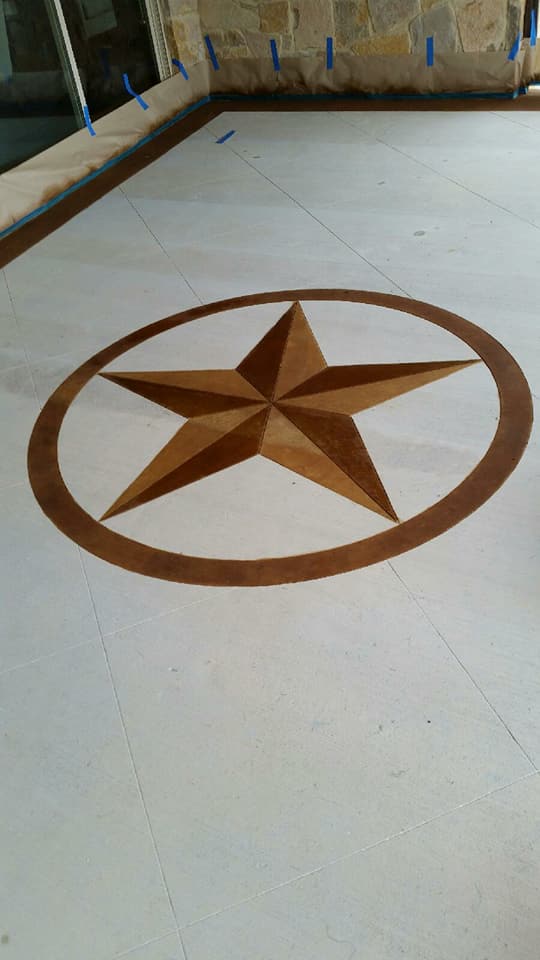
Saw-cut borders and contrasting color bands define the perimeter of the driveway and create a finished, framed appearance. A single border in a darker or contrasting stain color dramatically elevates the look of an otherwise plain driveway at minimal additional cost. Double borders, diagonal bands, and center medallion designs are all achievable on an existing slab.

Faux Stone & Tile Effects

Saw-cut grid patterns combined with multi-tone acid stain can produce a convincing natural stone or tile appearance on a concrete driveway. The saw cuts create the grout line visual, and the stain variation within each section reinforces the stone-tile effect. A popular design for Austin homes where the driveway connects directly to a stone or tile entryway and visual continuity matters.

Single-Color Field Stain

A clean, uniform field color in a single stain tone is the most economical staining option and still delivers significant curb appeal improvement over bare or faded concrete. Particularly effective with a crisp border cut along the driveway edges. We advise on color selection at the estimate — bringing sample chips and photos of completed Austin driveways for reference.

How We Stain a Concrete Driveway

Step 1 — Slab Assessment & Prep Planning

We evaluate the existing slab for surface contamination, previous sealers or coatings, cracks, and staining history. Existing sealers must be removed before acid stain can penetrate — we test for this during the estimate. Surface cracks are filled before staining. Oil and grease contamination is treated with degreasers and mechanical prep. The condition of the slab determines what is achievable and affects the stain result — we advise honestly at the assessment.

Step 2 — Surface Preparation

Mechanical preparation — grinding, shot blasting, or diamond tooling — opens the concrete surface and removes any contaminants that would prevent stain penetration or sealer adhesion. This step is non-negotiable. Driveways that have been previously sealed require complete sealer removal before restaining. We do not apply stain over incompatible existing coatings.

Step 3 — Design Layout & Border Cuts

Any saw-cut borders, bands, or grid patterns are cut before staining begins. Border and design cuts are made to specified depths and widths, then cleaned of debris before the staining process starts.

Step 4 — Stain Application

Stain is applied according to the design plan — field color first, accent colors and borders after. Acid stain is allowed to react fully with the concrete surface before neutralization and rinsing. Multiple coats or layered colors are applied in sequence with appropriate dwell time between applications.

Step 5 — UV-Stable Vehicle-Rated Sealer

Every stained driveway we complete is sealed with a UV-stable, vehicle-rated exterior topcoat before we leave the job. Anti-slip aggregate is incorporated into the sealer on all driveway applications — a smooth sealed surface is a slip hazard when wet, and driveways get wet. The sealer protects the stain, prevents oil and fluid penetration, and is the consumable that gets refreshed every 2–4 years.

What Affects Stain Results on an Existing Driveway

Concrete staining on driveways is not a one-size-fits-all process. These are the slab-level factors that affect the outcome — and that we assess before quoting.

Previous Sealers & Coatings

Acid stain cannot penetrate a sealed surface. If your driveway has been previously sealed — with any type of sealer — the sealer must be fully removed before acid staining can proceed. We test for existing sealers during the assessment. Water-based stain is more tolerant of lightly sealed surfaces but still requires proper prep for a quality bond.

Oil, Rust, & Surface Staining

Heavy oil contamination in the slab affects acid stain penetration and can create irregular color in affected areas. Rust stains from rebar or aggregate near the surface react differently with acid stain than surrounding concrete — sometimes producing an interesting effect, sometimes requiring treatment. We assess contamination during the estimate and advise on achievable outcomes.

Concrete Age & Mix Design

Older concrete and certain mix designs react more dramatically with acid stain — producing richer, more varied color. Newer concrete or low-aggregate mixes may produce lighter or more uniform results. The slab’s age, aggregate type, and finishing method all affect the final color. This is why we bring Austin project photos rather than manufacturer color chips to estimates — real-world results on real Austin slabs are more informative than lab samples.

Stained Concrete Driveway Services Across Austin & Central Texas

We stain concrete driveways throughout the Austin metro and surrounding communities, including Cedar Park, Round Rock, Georgetown, Leander, Pflugerville, Hutto, Manor, Liberty Hill, and Taylor.

Don’t see your city? Call (512) 909-5812 — we serve all of Central Texas.

Get a Free Stained Concrete Driveway Estimate in Austin, TX

We’ll assess your existing slab, discuss stain type and design options, and provide detailed pricing — no obligation. Serving Austin, Cedar Park, Round Rock, Georgetown, and all of Central Texas.

Fully insured. UV-stable vehicle-rated sealers. Free on-site estimates.

Frequently Asked Questions About Stained Concrete Driveways in Austin, TX

Stained concrete driveway pricing in Austin typically ranges from – per sq ft for a single-color stain and sealer on a prepared existing slab. Multi-color designs, saw-cut borders, and decorative patterns add to the cost based on design complexity. A standard two-car driveway (400–500 sq ft) typically runs ,000–,000 for staining and sealing. We provide free on-site estimates with detailed pricing — call (512) 909-5812.

Acid stain produces permanent, variegated, marbled color through a chemical reaction with the concrete — natural depth and variation, no two driveways look the same. Water-based stain produces more uniform, consistent color in a wider palette including grays and charcoals. For driveways, both are sealed with a UV-stable, vehicle-rated exterior sealer. Acid stain is the more popular choice for a natural stone aesthetic; water-based is better when a specific, uniform color is the goal.

The stain itself is permanent — it bonds chemically with the concrete and cannot fade, chip, or peel. The sealer is the consumable: UV-stable vehicle-rated exterior sealers on Austin driveways typically need resealing every 2–4 years depending on traffic, sun exposure, and the specific sealer product used. With proper sealer maintenance, a stained driveway looks good for decades.

Only after complete sealer removal. Acid stain cannot penetrate a sealed surface — if your driveway has been sealed with any product, the sealer must be mechanically removed before staining can proceed. We test for existing sealers during the assessment and factor removal into the project scope and pricing. Not disclosing a previous seal is the most common reason DIY staining attempts fail.

With proper prep, yes. Oil contamination must be treated with degreasers and mechanical prep before staining — residual oil prevents full stain penetration and creates irregular results. Rust marks from rebar or embedded aggregate react with acid stain differently than surrounding concrete, sometimes creating an interesting organic effect, sometimes requiring treatment. We assess contamination during the estimate and advise on achievable outcomes.

Acid stain results on a real driveway slab depend on the concrete mix, age, aggregate content, and surface condition — manufacturer color chips are lab samples on controlled concrete, not predictive of your specific slab. We bring photos of completed Austin driveways with comparable slab profiles to every estimate. Real-world Austin project photos are significantly more useful than manufacturer chips for setting accurate expectations.

A smooth sealed surface can be slippery when wet. Anti-slip aggregate is incorporated into the topcoat sealer on all driveway applications we install — it adds surface texture that improves traction without affecting the appearance of the stain color. This is standard on every driveway job, not an add-on.

Yes. Saw-cut borders, decorative bands, grid patterns, and multi-zone color designs are all achievable on an existing concrete driveway. Border cuts are made before staining and filled with a complementary or contrasting color. We discuss design options and bring reference photos to every estimate.

Most stained concrete driveway projects are completed in 1–2 days. Surface prep, stain application, and sealer all have specific drying and cure windows that determine the timeline. We confirm return-to-foot-traffic and return-to-vehicle-traffic timing before starting every project — vehicle traffic typically requires 24–48 hours after sealer application.

Depends on the existing stain and sealer condition. If the existing sealer is intact and adhered, it must be removed before restaining. If the surface is worn through to bare or lightly sealed concrete, restaining may be possible with proper prep. In some cases, a resurfacing overlay followed by staining is the better approach. We assess the existing surface during the estimate and advise on the most appropriate path.

Keep the surface clean — blow off debris, rinse as needed, address oil and fluid drips promptly with a degreaser before they penetrate the sealer. Reseal every 2–4 years with a UV-stable vehicle-rated exterior sealer. Avoid pressure washing with a concentrated nozzle directly on the surface. We provide a complete maintenance schedule at project completion.

Yes — but new concrete must cure for at least 28 days before staining. Fresh concrete contains moisture and surface compounds that interfere with acid stain penetration. Staining too early produces uneven, blotchy results that cannot be corrected. If you are having a new driveway poured, plan the staining appointment for at least 28 days after pour.

Yes. Partial staining for borders, accent bands, or feature areas is a common and cost-effective design approach. The unstained field area can remain as bare concrete or receive a clear sealer for protection. We design and quote partial staining projects regularly.

Yes. We stain concrete driveways throughout Central Texas, including Cedar Park, Round Rock, Georgetown, Leander, Pflugerville, Hutto, Manor, Liberty Hill, and Taylor. Call (512) 909-5812 to confirm service in your area.

Call (512) 909-5812 or fill out our contact form. We provide free on-site assessments for all stained concrete driveway projects — we evaluate your slab, bring color references and project photos, discuss design options, and provide detailed pricing with no obligation, anywhere in Austin or Central Texas.