Decorative Concrete of Austin – Polished & Stained Concrete installs decorative concrete on interior floors and outdoor surfaces throughout Central Texas, and one of the most common misunderstandings we encounter is the assumption that the same product system works equally well in both settings. The finish type can be similar. The sealer system cannot be. Austin’s climate creates specific demands on outdoor concrete that indoor applications simply do not face, and specifying the wrong sealer for the wrong environment leads to early failure and disappointing results.
This post explains what changes between indoor and outdoor decorative concrete applications in Central Texas, why it matters, and what the practical implications are for homeowners planning a project in either setting.
What the Central Texas Climate Does to Outdoor Concrete

Austin’s outdoor concrete environment is demanding by most national standards. Summer surface temperatures on sun-facing concrete can exceed ambient air temperature significantly. UV index is high for extended periods each year. The city experiences stretches of drought-level dryness followed by periods of significant rainfall. Winter brings occasional hard freezes with rapid temperature rebounds, sometimes within 24 hours.
Each of those factors stresses a concrete surface sealer in a specific way. UV radiation breaks down sealer chemistry over time, causing yellowing, chalking, and loss of surface protection. Thermal cycling causes the concrete slab to expand and contract, and a sealer that cannot flex with that movement will crack or delaminate. Moisture from rain and ground moisture works against sealer films that are not properly specified for the substrate conditions.
Interior concrete, sitting in a climate-controlled space, faces almost none of those stressors. The sealer on an indoor floor handles foot traffic, cleaning products, and modest humidity variation. That is a fundamentally easier environment, and the product systems appropriate for it are different from what belongs on an Austin patio or driveway.
Indoor Decorative Concrete: Finish and Sealer Options
The most common interior decorative concrete applications in Austin are polished concrete floors, stained concrete floors, and thin overlay systems including microtoppings. Each of these can be sealed with a range of interior-appropriate products that prioritize appearance, sheen level, and maintenance ease rather than UV resistance.
Interior sealer options include water-based acrylics, which are easy to apply and maintain and provide a range of sheen levels from matte to semi-gloss. Polyurethane sealers provide a harder, more durable film with better chemical resistance for high-traffic areas. Epoxy-based sealer systems offer maximum chemical resistance and are common in commercial interior applications. All of these work well indoors. None of them belong on an exposed outdoor surface in Austin.
Moisture vapor from below-grade slabs is an indoor-specific concern. Austin’s clay soil retains and moves moisture, and slabs on grade can transmit that moisture upward through vapor emission. High vapor emission rates can cause adhesion failures under coatings that are not vapor-permeable. We test for moisture vapor as part of our assessment for any interior floor project before specifying the sealer system.
Outdoor Decorative Concrete: What the Sealer System Must Handle
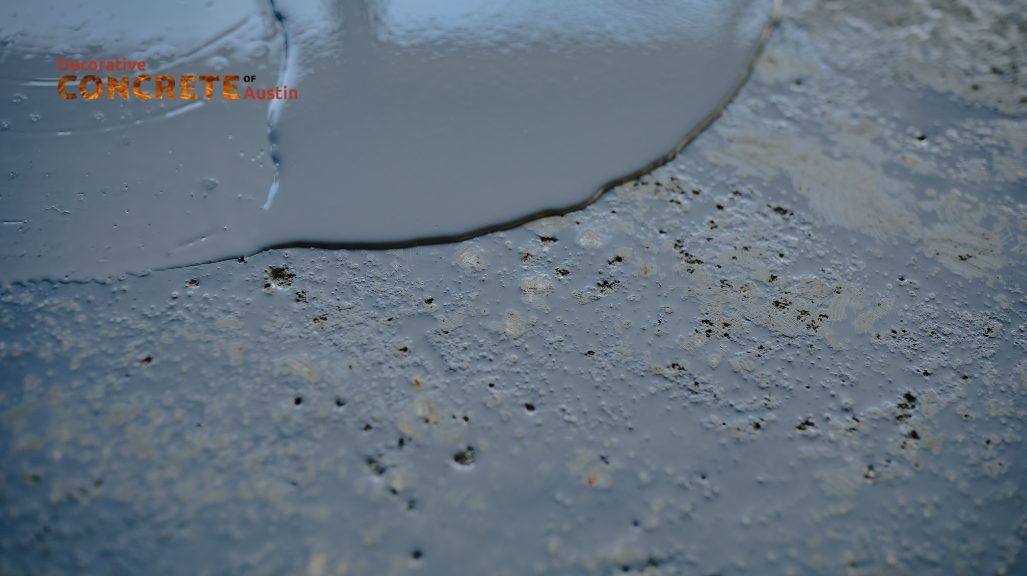
Outdoor decorative concrete applications in Austin, including concrete patios, driveways, and pool decks, require sealer systems built specifically for exterior exposure. The sealer must provide UV stability, thermal flexibility, moisture resistance, and in many cases, slip-resistant properties on surfaces that get wet.
Penetrating sealers are often used as the base layer for outdoor applications. A silane or siloxane penetrating sealer enters the pores of the concrete and chemically bonds to the concrete matrix, repelling water without forming a surface film that can peel. This provides a durable base level of protection that a topcoat can then be applied over.
For decorative outdoor surfaces where the appearance of the sealer matters, a UV-stable topcoat in an acrylic or polyurethane formulation is applied over the penetrating sealer. UV stability is non-negotiable for this layer. An exterior sealer that yellows under Austin sun will degrade the appearance of a stained or stamped surface faster than most homeowners expect, typically within two to three years without maintenance.
Resealing outdoor decorative concrete in Austin on a schedule of every two to three years is the primary maintenance requirement. Surfaces in heavy shade may go longer. South and west-facing surfaces in direct afternoon sun may need attention sooner. When the sealer shows signs of wear, water beading on the surface diminishes and the concrete takes on a dull, dry appearance rather than the wet-look sheen of a fresh application.
Covered Patios: The Middle Ground
Covered patios in Austin are one of the most favorable conditions for decorative concrete because they reduce the two most aggressive stressors: direct UV exposure and direct rainfall. A covered patio still needs an exterior-grade sealer because humidity, reflected UV, and temperature cycling still apply. But the sealer maintenance interval can extend beyond what a fully exposed surface requires.
Covered outdoor spaces in Austin are also where the finish options expand. A microtopping or highly polished surface that might not hold up well on an exposed patio does better under a covered structure because the reduced UV and water contact extends the sealer life. We discuss finish options for covered outdoor spaces separately from fully exposed applications because the performance parameters are genuinely different.
Pool Decks: Slip Resistance as a Non-Negotiable
Pool decks sit at the intersection of outdoor UV exposure and wet surface conditions, which makes the sealer and finish specification particularly important. An anti-slip additive incorporated into the sealer is standard for any pool deck application. The finish texture should also support drainage rather than pooling. Our pool deck resurfacing work always includes slip resistance specification as part of the project planning.
Color selection for pool decks in Austin should account for heat absorption. Darker concrete colors absorb significantly more heat in direct sun and can become uncomfortable underfoot in Austin summer conditions. Lighter tones and reflective sealer finishes reduce surface temperature for surfaces adjacent to pool water where bare feet are common.
Austin-Specific Planning Notes
Cedar pollen in January and February deposits a fine layer of material on outdoor surfaces throughout the Austin area. A sealed outdoor concrete surface is much easier to clean of cedar pollen than bare or poorly sealed concrete, where pollen can work into surface pores and cause staining. The sealer condition going into cedar season matters.
The occasional Austin hard freeze does not typically damage properly sealed concrete, but it does accelerate wear on sealers that are already past their resealing interval. A patio that went four years without resealing and then experiences a freeze-thaw cycle may show more sealer deterioration than expected. Staying on the two to three year resealing schedule is the most cost-effective protection.
Areas We Serve
Decorative Concrete of Austin – Polished & Stained Concrete serves indoor and outdoor concrete projects throughout Central Texas, including Lakeway, Round Rock, Leander, Georgetown, Cedar Park, and the surrounding area. We have completed more than 1,000 projects since 2012 and are fully insured. Contact us to schedule a free estimate. We will assess your surface, discuss the right finish and sealer system for your specific exposure conditions, and deliver a written proposal.