
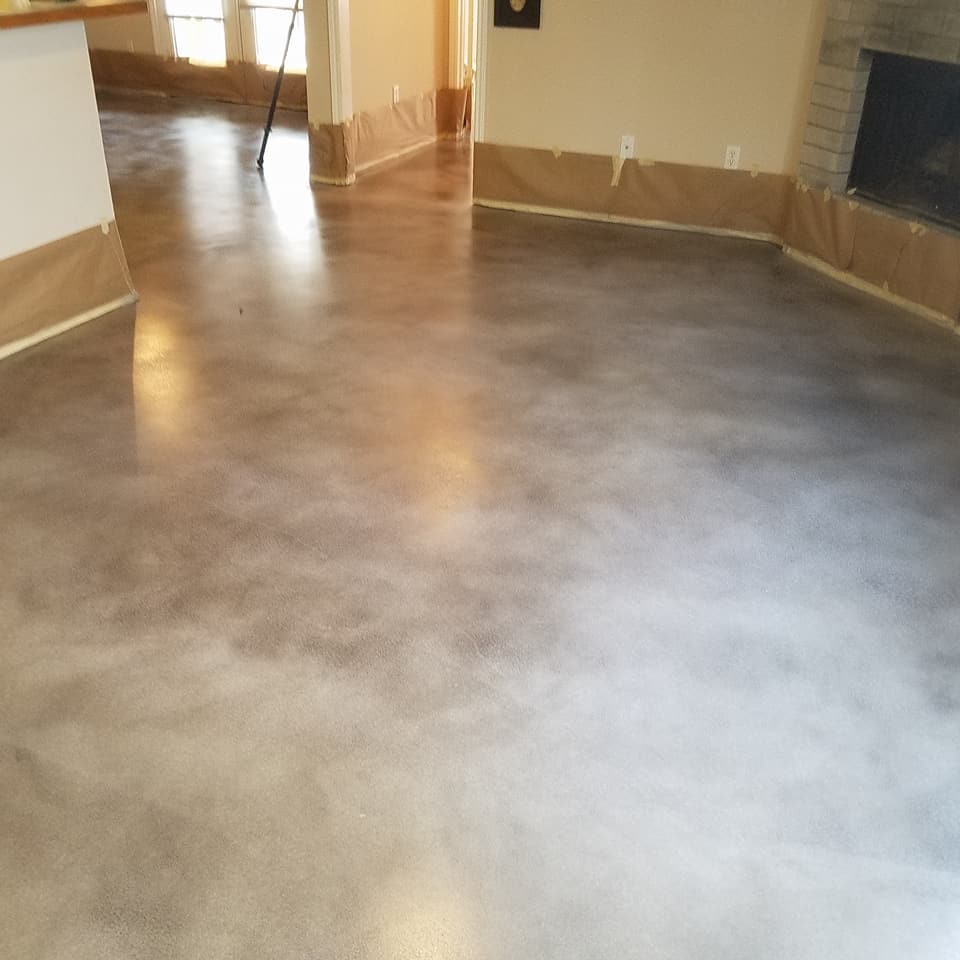
Decorative Concrete Interior Floors in Austin, TX

Stained concrete, polished concrete, epoxy coatings, and decorative overlays for living rooms, kitchens, offices, basements, and open-plan spaces throughout Austin and Central Texas.

Interior concrete floors offer more design flexibility than most people expect — and more durability than almost any alternative. Whether you want the warm, organic depth of acid-stained concrete in a living room, the clean reflective finish of polished concrete in an open-plan home, or the hard-wearing surface of an epoxy coating in a basement or utility space, Decorative Concrete of Austin has been delivering interior floor systems for Austin homes and businesses since 2012.

Locally owned since 2012. 1,000+ projects completed. Fully insured. Serving Austin and all of Central Texas.

Request Free Quote

  • This field is for validation purposes and should be left unchanged.

Table of Contents

Interior Concrete Floor Systems

We work with four primary systems for interior floors — each suited to different aesthetic goals, surface conditions, and use cases. We help you choose the right one during the free on-site assessment.

Stained Concrete Interior Floors

Acid stain and water-based stain penetrate existing concrete to produce rich, permanent color — sealed with a topcoat appropriate for interior traffic. Acid stain creates a natural, variegated, marbled effect unique to each slab; water-based stain produces more uniform, predictable color in a wider range of hues. One of the most popular interior floor choices in Austin for its warm aesthetic, low ongoing maintenance, and cost-effectiveness compared to tile or hardwood. View our stained concrete services.

Polished Concrete Interior Floors

Mechanical diamond polishing refines the concrete slab to a smooth, reflective finish — no coating, no topcoat to maintain, no waxing. Densifier is applied to chemically harden the surface; a concrete guard improves stain resistance. Available in cream polish, salt-and-pepper, and full aggregate exposure finishes. The best long-term low-maintenance interior floor option for open-plan homes, commercial spaces, offices, and anywhere foot traffic is heavy and ongoing maintenance needs to be minimal. View our polished concrete services.

Epoxy & Polyaspartic Interior Floor Coatings

High-build epoxy and polyaspartic coating systems for interior floors that need maximum durability and easy sanitization — utility rooms, basements, home gyms, commercial kitchens, medical offices, and retail back-of-house areas. Applied over properly diamond-ground concrete for a genuine professional-grade bond. Available in solid colors, chip and flake systems, and metallic finishes. View our full epoxy coating services.

Concrete Overlays & Microtopping for Interior Floors

For interior floors that are too worn, stained, or inconsistent for direct staining or polishing, a decorative overlay or microtopping creates a fresh, uniform surface that accepts finish treatments. Microtoppings — ultra-thin cement coatings applied in one or two passes — produce a seamless, contemporary floor popular in modern residential interiors, boutiques, and hospitality environments. View our overlay and resurfacing services.

Decorative Concrete Floors by Room

The right floor system varies by room — traffic level, moisture exposure, design priority, and how the space connects to the rest of the home or building all factor into the recommendation. Here is how we approach each space.

Living rooms are the most common interior stained or polished concrete application in Austin. Acid stain works particularly well in larger living spaces where the natural variation and depth of the finish can be fully appreciated. Polished concrete is a strong choice for modern or open-plan homes where the floor runs continuously from living to kitchen to dining without transitions. Both benefit from area rugs for comfort and acoustics — the floor anchors the space rather than competing with it.

Stained and polished concrete both perform well in residential kitchens — easy to clean, no grout lines to maintain, and compatible with radiant heat systems in slabs that have it. For commercial kitchens, high-build epoxy with anti-slip topcoat and seamless cove base is the standard. We advise on the right sealer type for kitchen moisture and cleaning chemical exposure during the estimate.

Bedrooms are ideal for stained or polished concrete when the rest of the home uses concrete floors and visual continuity matters. A matte or satin sealer keeps the finish quiet and residential rather than high-gloss. Comfort underfoot is the main consideration — area rugs handle this well, and the floor itself is easier to keep allergen-free than carpet.

Home offices and creative studios benefit from the clean, professional aesthetic of stained or polished concrete — a neutral, refined surface that does not distract. Polished concrete with a satin finish is a popular choice for Austin home offices in open-plan or converted spaces. Epoxy coatings work well for workshop-adjacent home offices or studio spaces where durability and easy cleanup outweigh aesthetics.

Basement and below-grade floors require moisture assessment before any coating or finish is applied. Moisture vapor coming up through the slab is a common failure point for both epoxy coatings and stain sealers if not addressed at installation. We test for moisture on every below-grade floor and select the appropriate primer and system. Epoxy with a moisture-mitigating primer is the most common recommendation for Austin basements; polished concrete with densifier is appropriate for drier conditions.

Open-plan and new construction concrete floors are the cleanest canvas to work with — consistent slab condition, no old adhesive, no previous coatings. Polished concrete and stained concrete both shine in these applications. For new construction, we coordinate with the GC or homeowner on surface prep timing — concrete needs to cure for at least 28 days before staining or polishing begins. We can advise on slab finish specifications during the build process to ensure the best possible outcome for the decorative treatment.

Cost-and-Installation-of-Epoxy-Floor-Coatings

Decorative Concrete vs. Tile, Hardwood & Carpet

Decorative Concrete vs. Tile

Decorative concrete produces a seamless surface with no grout lines to clean, crack, or discolor. Installation cost is comparable or lower than quality tile on an existing slab. Concrete cannot be replaced section by section if damaged, but overall durability in normal residential use is comparable or superior. Radiant heat compatibility depends on whether the system was designed for it in the original pour.

Decorative Concrete vs. Hardwood

Concrete does not warp, swell, or require refinishing every 7–10 years. It handles humidity and spills better than hardwood in Austin’s climate. Installation cost on an existing slab is typically lower than hardwood installed over subfloor. Concrete is harder underfoot — area rugs address this in living spaces. Stained concrete can closely approximate warm wood aesthetics with the right color and sealer combination.

Decorative Concrete vs. Carpet

Concrete does not trap allergens, pet dander, or odors. It does not wear unevenly or require replacement every 8–12 years. Cleaning is simple — sweep and damp mop. Initial cost on an existing slab is competitive with mid-range carpet installation. A popular upgrade choice for Austin rental properties, allergy-sensitive households, and anyone who has ever replaced carpet twice in the same decade.

Interior Concrete Floor Services Across Austin & Central Texas

We install decorative concrete interior floors throughout the Austin metro and surrounding communities, including Cedar Park, Round Rock, Georgetown, Leander, Pflugerville, Hutto, Manor, Liberty Hill, and Taylor.

Don’t see your city? Call (512) 909-5812 — we serve all of Central Texas.

Get a Free Interior Floor Estimate in Austin, TX

We’ll assess your floor in person, discuss your room’s specific requirements, and walk through system options with pricing — no obligation. Residential and commercial, any room, anywhere in Austin and Central Texas.

Fully insured. Locally owned since 2012. Free on-site estimates.

Frequently Asked Questions About Decorative Concrete Interior Floors in Austin, TX

Interior decorative concrete flooring typically ranges from – per sq ft for stained concrete on existing slabs, – per sq ft for polished concrete, – per sq ft for epoxy coatings, and –2 per sq ft for microtopping and overlay systems. Pricing depends on square footage, surface condition, system choice, and room complexity. We provide free on-site estimates — call (512) 909-5812.

Yes. Concrete flooring handles Austin’s climate without warping or swelling, pairs naturally with modern, contemporary, and industrial interiors, and is cost-effective when the slab is already in place. Stained and polished concrete are the most popular residential choices in Austin. We have installed interior concrete floors in hundreds of Austin homes across every neighborhood since 2012.

Yes, once the existing flooring is removed. After removal, we assess the exposed concrete for adhesive residue, old mastic, cracks, and surface condition. All contaminants must be removed before staining or polishing can begin. Surface condition after removal affects which finishes are achievable — we evaluate the slab during the estimate and advise honestly on outcomes.

In Austin’s climate, interior concrete retains ambient temperature well — it does not get cold the way it might in northern climates. The floor is hard underfoot, similar to tile. Area rugs in living rooms and bedrooms handle comfort well. The tradeoff most Austin homeowners make willingly: easier cleaning, no allergens, and a floor that does not need replacing every decade.

Acid-stained concrete with a satin sealer is the most popular living room choice in Austin — it produces a warm, organic look that works with a wide range of interior styles. Polished concrete at a low-to-mid sheen level is the better choice for modern or minimalist interiors where a clean, uniform surface is preferred. We bring samples and project photos to every estimate.

Yes. Stained and polished concrete both perform well in residential kitchens — seamless, no grout lines, easy to clean, and compatible with most kitchen layouts. We use interior-grade topcoat sealers with appropriate chemical and moisture resistance for kitchen applications. For commercial kitchens, high-build epoxy with anti-slip topcoat is the standard recommendation.

Yes. Stained or polished concrete in bedrooms works well when the rest of the home uses concrete floors and visual continuity matters. A matte or satin finish keeps the aesthetic warm and residential. Area rugs provide comfort underfoot and define the space. Concrete in bedrooms is easier to keep clean and allergen-free than carpet.

Moisture assessment is the first step for any below-grade floor. We test for moisture vapor transmission before recommending a system. Epoxy with a moisture-mitigating primer is the most common recommendation for Austin basements. Polished concrete with densifier is appropriate for drier conditions. We never skip moisture testing on below-grade floors — it is the primary failure point for basement coatings.

Yes. New construction is the ideal scenario — consistent slab, no contaminants, full control over prep timing. Concrete needs to cure for at least 28 days before staining or polishing. We can advise on slab finish specifications during the build process to ensure the best outcome for the decorative treatment. We work with builders and homeowners throughout Austin on new construction floor installations.

A microtopping is an ultra-thin cement-based overlay applied in one or two passes to create a seamless, contemporary interior floor surface. Used when the existing concrete is too worn, stained, or inconsistent for direct staining or polishing — it provides a fresh, uniform canvas that accepts stain, dye, or sealer. Popular in modern residential interiors, boutiques, restaurants, and office renovations.

Interior stained concrete with a quality sealer lasts the life of the slab — the color is permanent. The sealer requires refreshing every 3–7 years depending on traffic and sealer type. Polished concrete is permanent with no sealer to maintain. Epoxy coatings in residential interiors typically last 10–20 years before a topcoat refresh is needed. Proper surface preparation at installation is the single biggest factor in longevity.

Decorative concrete floors are generally viewed as a premium finish by Austin buyers, particularly in the modern, contemporary, and industrial-aesthetic segments that dominate new construction and renovation in many Austin neighborhoods. They are a differentiator rather than a baseline expectation — which means they tend to be viewed favorably in listing photos and walkthroughs. We cannot guarantee value increase, but the consistent feedback from clients who have sold is positive.

Yes. We work with you on color selection before starting any project — bringing acid stain and water-based stain samples, showing completed project photos from comparable Austin homes, and advising on how colors will read on your specific slab. Exact color matching to paint chips or tile samples is not always possible with acid stain due to the reactive nature of the process, but we get very close with water-based stain and dye systems.

Yes. We install interior concrete floor systems throughout Central Texas, including Cedar Park, Round Rock, Georgetown, Leander, Pflugerville, Hutto, Manor, Liberty Hill, and Taylor. Call (512) 909-5812 to confirm service in your area.

Call (512) 909-5812 or fill out our contact form. We provide free on-site assessments for all interior floor projects — residential and commercial, any system, any room, anywhere in Austin or Central Texas. We assess the floor, discuss finish options, and provide detailed pricing before any work begins.