Decorative Concrete of Austin – Polished & Stained Concrete has been answering the “is this worth it?” question since 2012, and the honest answer is that it depends on what you are comparing it to, what your goals are, and how you define return on investment. This post looks at the question from three angles: longevity and durability, maintenance cost compared to alternatives, and effect on property value in the Austin market.
The focus here is installed decorative concrete, including polished floors, stained floors, epoxy coatings, and decorative patio surfaces. The investment comparison is against alternatives like hardwood, tile, pavers, carpet, and wood decking.
Longevity: What Decorative Concrete Actually Lasts

The useful life of a decorative concrete surface is determined primarily by two things: how well the installation was done and whether the sealer is maintained on schedule. A properly installed and sealed decorative concrete floor in an interior application should last 20 to 30 years or more without structural failure. The surface may need periodic resealing, but the underlying concrete does not degrade the way hardwood, tile grout, or carpet does over time.
In Austin’s climate, exterior surfaces have higher maintenance requirements. Outdoor sealed concrete on patios, driveways, and pool decks needs fresh sealer every two to three years because Central Texas UV exposure and the temperature swing from summer to winter degrades sealer faster than in cooler climates. The concrete itself lasts. The sealer needs renewal. Budget for that as part of the total cost of ownership.
Compare that to alternatives. Carpet typically requires replacement every 8 to 12 years. Hardwood needs refinishing every 7 to 10 years in a lived-in home and full replacement eventually. Quality tile lasts longer but grout lines crack and stain over time, and individual tiles can fracture with the slab movement that is common in Central Texas clay soil.
Maintenance Cost Comparison
Over a 10-year period, the maintenance cost of decorative concrete is typically lower than the maintenance cost of hardwood and comparable to quality tile. Here is how the comparison breaks down for the most common Austin residential applications.
Polished concrete floors require periodic re-buffing to maintain the sheen and reapplication of a topical guard depending on the polish level and traffic volume. This is a lower-cost service than hardwood floor refinishing, which involves sanding, staining, and recoating. Hardwood refinishing is a multi-day process that requires moving furniture out and staying off the floors while the finish cures.
Stained concrete floors require resealing when the sealer shows wear. A high-quality sealer on an interior floor can last three to five years between reapplication cycles. Our stained concrete cost guide covers the full cost breakdown.
Epoxy floor coatings and garage floor coatings are particularly strong on ROI in Austin. Garage floors take heavy abuse: vehicle traffic, chemical exposure, and temperature cycling. Epoxy-coated concrete handles that far better than bare concrete or any alternative floor covering, and the coating extends the life of the concrete slab itself.
The honest caveat: a decorative concrete surface that was improperly installed will not deliver this maintenance profile. Inadequate prep, wrong sealer for the exposure conditions, or a coating applied without proper adhesion testing will fail early. The quality of the installation is the variable that determines whether the surface performs as described.
Property Value in the Austin Market
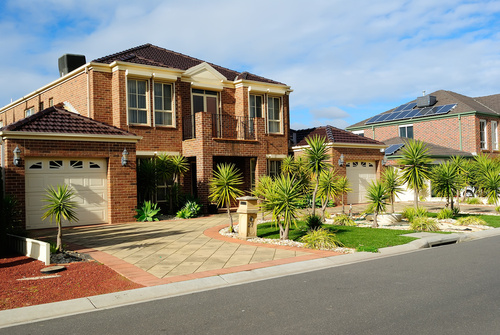
The Austin real estate market’s view on decorative concrete has shifted over the past decade. In the early 2000s, polished or stained concrete floors in a residential home were unusual enough to need explanation at a showing. Today, in design-forward Austin neighborhoods like Tarrytown, Mueller, East Austin, and Barton Hills, polished and stained floors are considered a premium feature.
In suburban markets like Round Rock and Lakeway, reception is more variable and depends on the buyer pool. Contemporary homes in newer developments with open floor plans tend to show well with polished concrete. More traditional home styles in those same markets may see a more neutral buyer response. The neighborhood and the home style both matter.
Outdoor living spaces are a consistent value-add in the Austin market. A decorative concrete patio with a quality stamped or stained finish is a selling point in a market where outdoor living is part of the Austin lifestyle. The ROI on outdoor decorative concrete is strongest when the finish quality is high and the project is proportional to the home value.
ROI by Application Type
Interior floors deliver the highest ROI in design-forward neighborhoods and homes where concrete fits the aesthetic. The impact is more neutral in markets where buyers actively seek hardwood.
Garage floor coatings deliver consistently strong ROI. The coating protects the slab, improves the utility of the space, and appeals to buyers who use their garage for more than storage. An uncoated garage with oil stains reads as neglected. An epoxy-coated garage reads as cared for.
Decorative patios and driveways deliver their strongest ROI when the project fits the scale of the home and the neighborhood. Concrete overlay and resurfacing projects often deliver the strongest immediate ROI in this category because they transform an existing surface without the cost of a full removal and replacement pour.
The Bottom Line
Decorative concrete is worth the investment when the installation is done right. Proper prep, the correct finish system for the application, and an appropriate sealer are what determine whether the surface performs over 20 years or fails in two. Decorative Concrete of Austin – Polished & Stained Concrete has completed more than 1,000 projects across Central Texas since 2012 and is fully insured. The free estimate is where we assess your specific surface and tell you what it realistically needs.
Contact us to schedule a free estimate. We serve Austin, Round Rock, Georgetown, Cedar Park, Lakeway, Pflugerville, Leander, and the surrounding area.