When homeowners call us at Decorative Concrete of Austin – Polished & Stained Concrete about staining their concrete floors, the first question is almost always about color. The second is usually some version of this: what’s the difference between acid stain and water-based stain, and does it matter which one I use?
It does matter. Not because one is better than the other in every situation, but because they work completely differently and produce results that do not look much alike. Choosing the wrong one is not necessarily a disaster, but it is the kind of decision you want to make with accurate information rather than whatever a flooring forum posted six years ago. We see the consequences of mismatched expectations on every job where a homeowner came in with a fixed image of what they wanted and the wrong stain system selected before we got involved.
Here is a straight explanation of both systems, how they behave, and what each one is and is not capable of producing.
How Acid Stain Works

Acid stain is a reactive product. It contains metallic salts and a dilute acid, and when applied to concrete, a chemical reaction takes place between the stain and the calcium hydroxide and other minerals present in the slab. The color that results is not a coating sitting on top of the concrete. It is a product of the reaction itself, embedded in the surface. Once the reaction completes, the surface is neutralized, and a sealer is applied, the color is there permanently.
This permanence is one of the most important qualities of acid stain. You cannot scratch it off the way you can scratch paint. It will not peel, bubble, or chip. It will not fade from UV exposure. Under normal foot traffic and with appropriate sealer maintenance, an acid-stained floor looks the same at twenty years as it did at one.
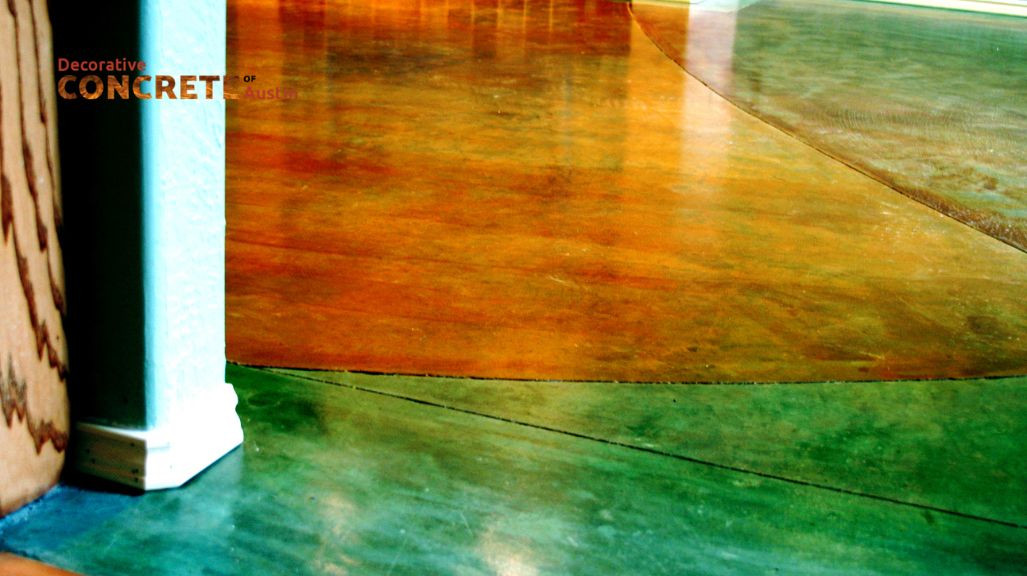
The tradeoff is that acid stain operates within a specific and fairly narrow color range. The palette is warm: ambers, tans, terracottas, coffee browns, and some cooler slate blues and greens depending on the mineral content of the slab. The colors are earthy and organic. Most people who choose acid stain are specifically after that quality. It looks like something that emerged from the material rather than something applied to it.
What acid stain cannot do is match a specific paint color, produce a consistent flat tone, or deliver grays, whites, charcoals, or any color that falls outside its reactive range. The results also vary from slab to slab because each concrete mix has a different mineral composition. Two slabs poured by the same crew in the same week can produce noticeably different acid stain results. This is not a defect. It is the nature of the process. But it means the homeowner has to be comfortable working within a range rather than toward a precise target.
If you have a tight design palette, a specific color in mind, or a need for consistency across a large surface, acid stain is the wrong system. It will frustrate you.
How Water-Based Stain Works
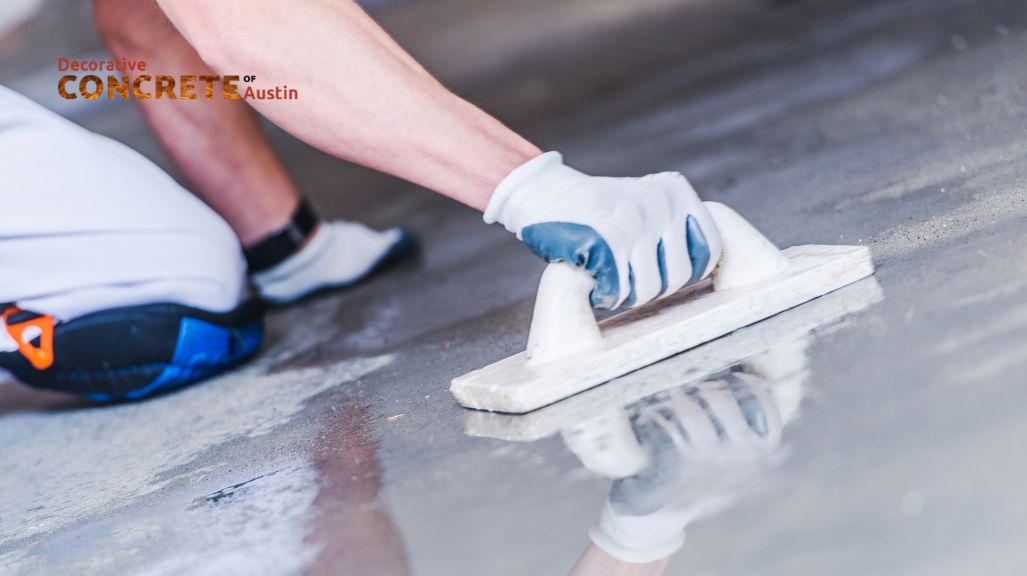
Water-based concrete stain also penetrates the surface, but it works through pigment deposition rather than a chemical reaction. The pigment carries into the pores of the concrete and deposits color there. Because the color is controlled by the pigment rather than by a reactive process, the results are more predictable and consistent. You get a much wider palette, including grays, blues, greens, whites, and custom mixed colors. You also get a more uniform appearance, which is what a lot of design-forward projects require.
The depth and character of water-based stain is different from acid stain. Where acid stain looks organic and alive, water-based stain looks intentional and controlled. Neither is the right word to use as a compliment or a criticism. They produce different aesthetics for different purposes. A minimalist modern interior in West Austin and a 1960s bungalow renovation in Hyde Park need completely different approaches, and the stain system is part of that decision.
Water-based stains are also more forgiving during application. Acid stain requires precise control over application rate and coverage, careful neutralization after the reaction is complete, and a reasonably high level of experience with how the chemistry behaves on different slab types. Get it wrong and the results are difficult to correct. Water-based stain has a more predictable learning curve and more room for adjustment during the job.
On durability, both systems perform comparably once sealed. Water-based stain is not less permanent than acid stain. It is not sitting on top of the concrete in a way that can be removed. With proper surface prep and a quality sealer, a water-based stained floor holds its color indefinitely.
The Role of Surface Preparation
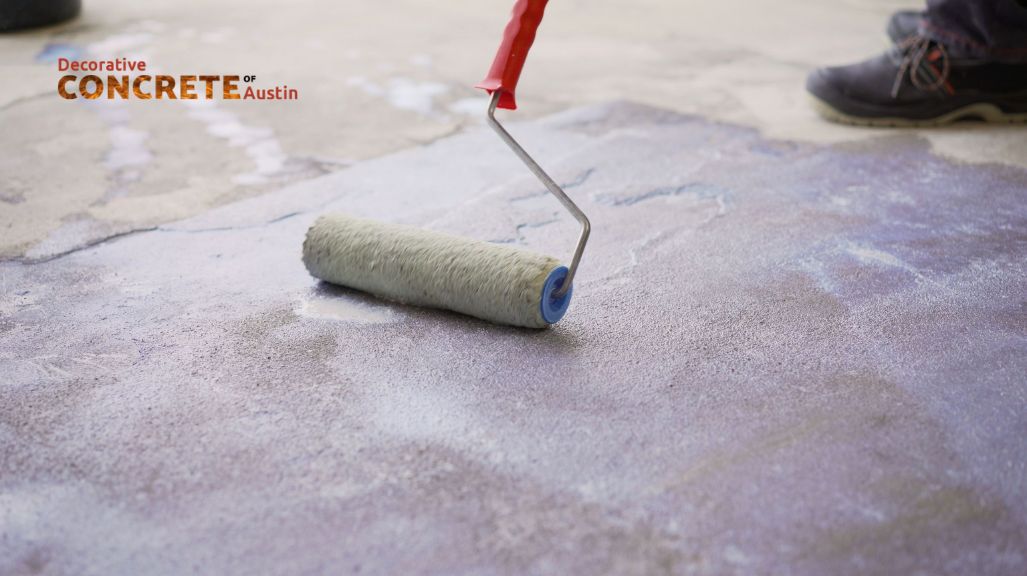
 Regardless of which stain system you choose, the surface preparation is the most critical part of the job. Both acid stain and water-based stain need to penetrate the concrete surface. Anything that blocks that penetration, whether it is an existing sealer, paint, adhesive residue, oil contamination, or surface hardeners applied during the original pour, will cause the stain to fail or produce irregular results.
Acid stain is particularly sensitive to surface conditions. Because the color comes from a chemical reaction, any variation in what the stain contacts produces variation in the color. This can be used intentionally to create more movement and character in the finish, but it can also produce blotchy or uneven results if the prep was not thorough. On slabs that have been previously painted or sealed, the old coating needs to come off completely before acid stain can be used.
Water-based stain is more tolerant of minor surface imperfections and has some capacity to produce a more even result on slabs with varied surface conditions. But it still requires a properly cleaned and prepped surface to penetrate correctly. Neither system is a good candidate for shortcuts in the prep phase.
We assess every slab as part of the stained concrete estimate process. The prep required for your particular slab determines a significant portion of what the job involves and what the achievable result looks like. This is why we do not quote stain work without seeing the surface.
Choosing the Right System for Your Project
The decision between acid stain and water-based stain is ultimately an aesthetic one, provided both systems are viable for your slab. Here are the questions we ask during a consult to help narrow it down.
What is the existing character of the space? Older homes, particularly Central Austin bungalows and South Austin craftsman-style houses built in the mid-twentieth century, often have slabs with visible variation, aggregate exposure, and imperfections that pair beautifully with acid stain. The earthy, variable tones amplify the character of the space rather than working against it. Newer homes and commercial spaces with smoother, more uniform slabs are better candidates for water-based stain where a more controlled result is appropriate.
What is the design palette? If the project involves a specific color family or a designer is involved, water-based stain is almost always the better choice. Acid stain cannot be color-matched to anything outside its natural range. Water-based stain can be mixed to match or complement virtually any palette.
How much variation is acceptable? Some homeowners love the organic movement in acid-stained floors. Others find it unsettling if they were expecting something more even. We show comparable projects during the estimate so clients have a clear picture of what to expect from each system before committing.
For patios, driveways, and other exterior surfaces, both systems are available. The sealer specification matters more for exterior applications than which stain you choose, since UV stability and weather resistance are the primary durability concerns outdoors. We cover exterior-specific decisions in our guide to stained concrete patios in Austin.
What to Expect During the Job
For interior stained concrete floors, the process typically runs one to two days depending on the size of the area and the prep required. Day one covers surface cleaning, any mechanical prep including grinding or scarifying if needed, and stain application. For acid stain, the neutralization step follows application before the surface can be sealed. Water-based stain has a shorter application-to-seal window.
The sealer goes on after the stain is fully dry and the surface has been addressed per the stain manufacturer’s requirements. We use high-quality sealers appropriate for the specific exposure: different products for interior floors versus exterior concrete, and different formulations for high-traffic commercial areas versus residential living spaces.
Foot traffic is typically possible within 24 hours of the final sealer coat curing, though we ask clients to avoid heavy furniture moving and wet mopping for a few days to allow the sealer to fully harden.
Making the Final Call

Most homeowners who call us uncertain between acid stain and water-based stain leave the site visit with a clear direction. Once we can look at the slab, discuss the design intent, and show project photos from comparable spaces, the right system tends to become obvious. What we avoid is pushing a client toward a system because it is faster or easier for us. The goal is the result the client wants, on the specific slab in front of us, with a realistic understanding of what each system can deliver.
If you are in the early stages of deciding, reach out to schedule a free estimate. We serve all of Austin and Central Texas and do on-site assessments at no charge.